
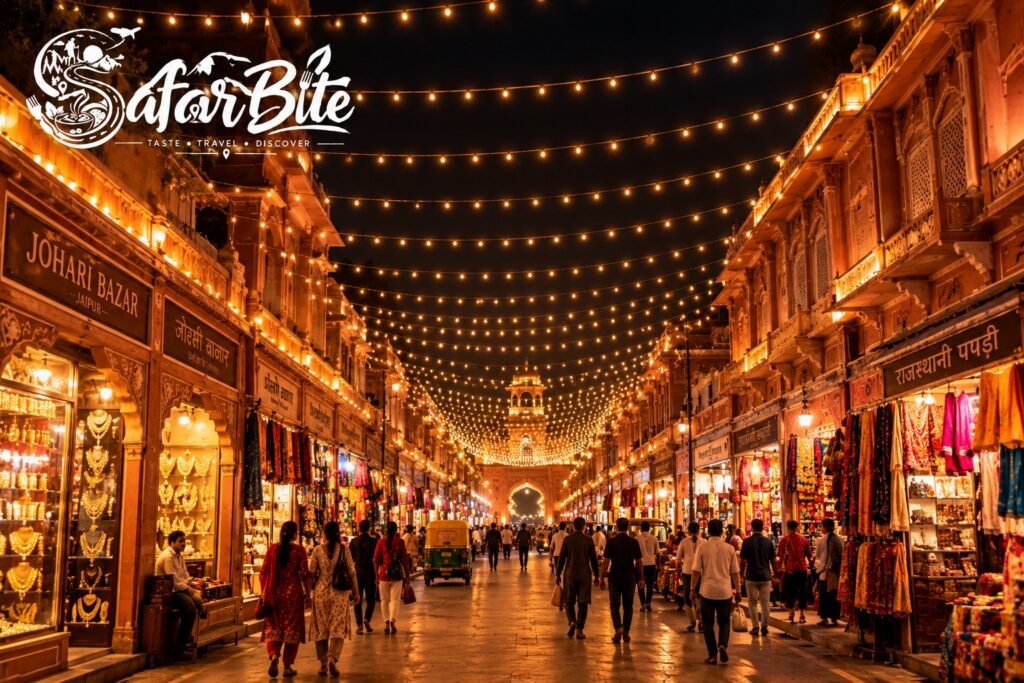
Every year between Dhanteras and Bhai Dooj, Jaipur’s Walled City turns into an open-air illumination showcase. Merchant trade unions compete to out-decorate neighboring streets, running thousands of meters of coordinated serial bulbs over classical pink terracotta archways. But if you make the mistake of driving an SUV or hailing a cab directly into Johari Bazaar or Tripolia, you will spend your festival evening staring at red brake lights from a motionless lane.
Traffic police routinely seal private vehicle entries at Ajmeri Gate, Sanganeri Gate, and Ghat Gate once dusk settles. To experience the grandeur without the misery, you need a planned one-way foot trail powered by the Jaipur Metro.
THE LOCAL TRANSIT BLUEPRINT
Crucial Ground Rules Before You Step Out
- The Inbound Lifeline: Take the Jaipur Metro to Chandpole Metro Station (₹15–₹20 ticket). Entering the Old City underground bypasses surface barricades entirely.
- The “One-Way Walk” Rule: Start from Chandpole on the west end and walk east toward Badi Chaupar, dropping down through Johari Bazaar to exit south at Sanganeri Gate. Never attempt to walk counter-current to festival crowd flow.
- Vehicle Parking Hubs: If driving from Malviya Nagar, Mansarovar, or Vaishali Nagar, park at the Ram Niwas Bagh Underground Parking or near Chaugan Stadium before 5:30 PM. Walk the rest. Do not try street parking inside.
- Timing Window: The sweet spot is 6:30 PM to 8:30 PM. Past 9:00 PM, family crowds from across the state peak and walking pace slows to a crawl.
The Anti-Traffic Diwali Walking Route
| Stop & Time | Bazaar / Stretch | What to Watch For | Food & Chai Check |
|---|---|---|---|
| 6:30 – 7:15 PM | Chandpole to Chhoti Chaupar | Geometric crystal canopy arches | Hot Kadhi Kachori near Chandpole Gate (₹25–₹35) |
| 7:15 – 8:00 PM | Tripolia Bazaar & Isarlat Tower | Brass market chandeliers & royal palace facade | Mawa Kulfi & dry fruit lassi stands |
| 8:00 – 8:45 PM | Chaura Rasta to Badi Chaupar | Wide overhead decorative panels & Hawa Mahal glow | Wood-fired clay cup tea at Sahu Chai (₹25) |
| 8:45 – 9:30 PM | Johari Bazaar to Sanganeri Gate | Dazzling jewelry lane canopy & Laxmi Puja gates | Kanji Vada & hot jalebis (₹40–₹60) |
| 9:30 – 10:15 PM | Bapu Bazaar or MI Road Exit | Textile lighting curtains or outer avenue grand lights | Late-night kulfi falooda near New Gate |
Step 1: Chandpole Bazaar (The Clean Entry Point)
Begin by disembarking at the underground Chandpole Metro Station. When you step out onto the surface pavement, the historic Chandpole Darwaza acts as an illuminated tunnel framing the entire west-to-east commercial corridor.
Trade associations here favor symmetrical overhead lattice lights that mimic traditional jali screens. Because foot traffic is thinner on this side than near the tourist epicenter of Hawa Mahal, you can walk at a comfortable pace, photograph shop fronts, and grab a freshly fried dal or pyaaz kachori from roadside vendors for under ₹30 without waiting in a massive line.
Step 2: Tripolia Bazaar & The Royal Facades
Crossing through Chhoti Chaupar brings you directly into Tripolia Bazaar. This stretch runs along the southern exterior walls of the City Palace complex. The merchants here consistently construct some of the most elaborate decorative chandeliers across the Walled City, competing for the municipal Diwali decoration trophies.
Look up toward the Isarlat (Swargasuli Tower). During festival week, this seven-story minaret is draped in vertical strands of golden lighting. If you have followed our practical 4 Hours in Jaipur Day Itinerary, you will recognize this stretch—but by night, the daytime hardware and utensil shops transform into glowing merchant galleries.
Step 3: Chaura Rasta Cut & Badi Chaupar
At the junction of Tripolia and Chaura Rasta, take a quick five-minute detour south toward New Gate to experience the straight avenue sightlines. Chaura Rasta is broad, giving you plenty of breathing room. Stop right by Sahu Chai for a warm glass of slow-simmered, cardamom-spiced tea served in traditional clay kulhads. It costs ₹25 and gives you the energy boost needed for the busiest stretch ahead.
Rejoin the main axis heading toward Badi Chaupar. Here, the facade of Hawa Mahal is bathed in amber lighting. The traffic island at Badi Chaupar gets crowded, so stay on the marked pedestrian footpaths and do not drift into middle intersections where emergency vehicles and police shuttles operate.
Step 4: Johari Bazaar (The Grand Finale)
Turn south down Johari Bazaar. This is undisputed ground zero for Jaipur Diwali celebrations. Backed by centuries-old bullion merchants and jeweler unions, Johari Bazaar strings continuous overhead light tunnels that cover entire street blocks.
Expect shoulder-to-shoulder crowds as families shop for festive silver coins and gemstones. Keep personal bags zipped in front of you. Along the sidewalk colonnades, stop for a glass of sour-spicy Kanji Vada (₹40–₹50) to cleanse your palate, followed by piping hot, crisp saffron jalebis fried right on the roadside in pure desi ghee.
How to Exit Cleanly Without Waiting for Cabs?
Never try booking an app-based cab (Uber or Ola) directly inside Sanganeri Gate or near Badi Chaupar during festival night peak hours. Drivers routinely cancel due to perimeter diversions, leaving you stranded in curbside dust.
Instead, take one of these two proven exit hacks:
Option A: The Metro Return
Walk back 300 meters into Badi Chaupar Metro Station. Jaipur Metro runs extended late-night trains during the festival week. Board straight back to Railway Station or Mansarovar without touching surface traffic.
Option B: Walk to MI Road
Cut through Bapu Bazaar and exit via New Gate toward MI Road. The wide pedestrian walkways along MI Road (near Panch Batti and Raj Mandir) let you flag down metered auto-rickshaws heading toward C-Scheme or Civil Lines easily.
SafarBite Reality Check: What to Expect
Total Walking Distance: Roughly 3.2 kilometres from Chandpole to Sanganeri Gate. Wear broken-in sneakers, not new festival leather sandals.
Expense Per Person: ₹100–₹250 covers all metro tokens, tea rounds, and signature street sweets. Viewing the lights along public city streets is 100% free; beware of anyone selling “viewing passes”.
Restroom Availability: Public restrooms inside old market corridors are basic and heavily used. Use the clean facilities inside the underground Metro stations (Chandpole or Badi Chaupar) before starting your walk.
Late Night Hunger: If you are still exploring past 11:00 PM, consult our field-tested guide to Jaipur Past Midnight: Late-Night Food & Chai Addas.
Frequently Asked Questions
What time do the Jaipur Diwali lights turn on and off?
Market illuminations turn on right at dusk (around 6:00 PM to 6:30 PM) and remain illuminated until at least midnight, with primary gates and outer avenues like MI Road often glowing until 1:00 AM on main festival dates.
Are cars and autos allowed inside the Walled City on Diwali?
Jaipur Traffic Police typically restrict private 4-wheelers and commercial cars from entering the interior market circuits between 6:00 PM and midnight to avoid massive gridlock. The Jaipur Metro or walking on foot are the only dependable transit options.
Can I view the Jaipur Diwali lights from Nahargarh Fort?
While the ridge of Nahargarh offers an impressive aerial view of the sparkling grid city below, the winding Aravalli mountain road experiences severe bottle-neck traffic on Diwali evening. If you head up to the fort, plan to reach before 4:30 PM and expect prolonged delays when descending.
EXPLORE THE FLAVORS OF RAJASTHAN
Complete Your Jaipur Festival Trail
Festival touring works up a real appetite. Pair your night lighting walk with Jaipur’s culinary heritage—from slow-cooked authentic Dal Baati Churma thalis to tangy home-style Gatte Ki Sabzi across our curated culinary archives.